Glutathione Precursor Supplements: Which Bottleneck Are You Solving?
Published Date: Last Updated:At a Glance
What You'll Learn
- ✓ What a glutathione precursor is
- ✓ Why the first, regulated step of glutathione production matters most
- ✓ Where NAC, GlyNAC, GGC and oral glutathione each enter the pathway
- ✓ What each key human study actually measured
- ✓ Four questions to ask of any precursor supplement
Key Points
- ✓ A glutathione precursor is a nutrient your cells directly use to make glutathione. Cells make it in two steps.
- ✓ NAC and GlyNAC supply amino acids for steps one and two. Gamma-glutamylcysteine (GGC, sold as Glyteine®) is the product of step one.
- ✓ Step one is regulated: when glutathione is at normal levels, it slows the production of GGC and consequently glutathione.
- ✓ No study has yet compared NAC, GlyNAC and GGC head to head.
If you’ve searched for a way to raise glutathione, you’ve probably been told two things: don’t bother swallowing glutathione itself, and take a precursor instead. Then you hit a wall of options. NAC. GlyNAC. Whey. Liposomal glutathione. Gamma-glutamylcysteine.
Most guides rank these by popularity. We think a better question is which part of your body’s glutathione production each one is trying to help. Once you see the pathway, the options sort themselves out.
What Is a Glutathione Precursor?
A glutathione precursor is any nutrient your cells can use directly to build glutathione, the antioxidant molecule produced in every cell in your body. Glutathione is made from three amino acids: glutamate, cysteine and glycine. Your cells assemble it inside the cell, in two steps:
- Step 1: the glutamate-cysteine ligase (GCL) enzyme joins glutamate and cysteine to produce gamma-glutamylcysteine (GGC).
- Step 2: the glutathione synthetase (GS) enzyme adds glycine to GGC to produce glutathione.
Any of the ingredients along that route can be called a precursor. GGC is the immediate precursor, because it is one step away from glutathione.

Figure 1. Where each supplement type enters glutathione production.
Why Does Step One Matter Most?
Step one is the slow, controlled (regulated) step. Biochemists call it rate-limiting. It is also self-regulating: when glutathione is at its normal (basal) level, glutathione slows the activity of the GCL enzyme down. This feedback inhibition was first described in 1975 and is why your cells hold (maintain) glutathione within a fairly narrow range, a state called homeostasis.
The GCL enzyme has two parts (subunits): one does the chemistry, and a second “modifier” subunit responds to glutathione and helps keep production in check. Step two works differently. The enzyme that finishes the job, glutathione synthetase (GS), is not held back by glutathione. It keeps working as long as it has supplies of GGC, glycine and energy.
Three things follow from that:
- Supplying more raw material for step one (cysteine) can help when you’re short of it, but the gate still decides how much gets through to produce glutathione.
- GCL activity tends to decline with age. A 2016 review linked the age-related fall in glutathione to changes in how much GCL cells make and how active it is, including weaker signalling from Nrf2, a protein that switches on antioxidant genes. i.e., basal (homeostatic) glutathione levels decline with age
- Anything that arrives after the gate (GCL) only has to pass the unregulated second step.
The Energy Cost: Two ATP or One
Each step uses one unit of cellular energy (ATP). Building glutathione from amino acids costs two ATPs. Building it from GGC costs one, because the first step has already been done. For most people on most days that difference is small. It matters more for cells that are short on energy as well as on glutathione, which is common in older cells.

Figure 2. Energy cost of making one molecule of glutathione by each route. Sources: Lu 2013; Ferguson & Bridge 2016.
So there are really three different strategies, each aimed at a different bottleneck.
The Three Strategies, Side by Side
1. Supply the raw materials: NAC and GlyNAC
NAC (N-acetylcysteine) is a form of cysteine, usually the scarcest of the three amino acids. GlyNAC pairs NAC with glycine. Both work before step one. They make the most sense when supply is the problem: in randomised trials, GlyNAC raised glutathione in older adults who started with low levels, while a larger two-week trial in healthy adults found no overall increase compared with placebo, except in people with high oxidative stress and low starting glutathione.
One nuance: the glycine in GlyNAC isn’t reserved for glutathione. Your body also uses glycine to make collagen, creatine and some brain chemical messengers, so not all of it goes where the label suggests.
2. Get past the gate: gamma-glutamylcysteine (GGC)
GGC is the molecule step (GCL) one produces. Taken orally, it arrives after the regulated step, leaving only step two to complete.
In a 2017 published human bioavailability study in Redox Biology, single 2 g and 4 g doses of GGC raised glutathione inside lymphocytes (a type of white blood cell) by 100% and 200%, respectively, within 3 hours before returning to basal (initial) levels by 5 hours.
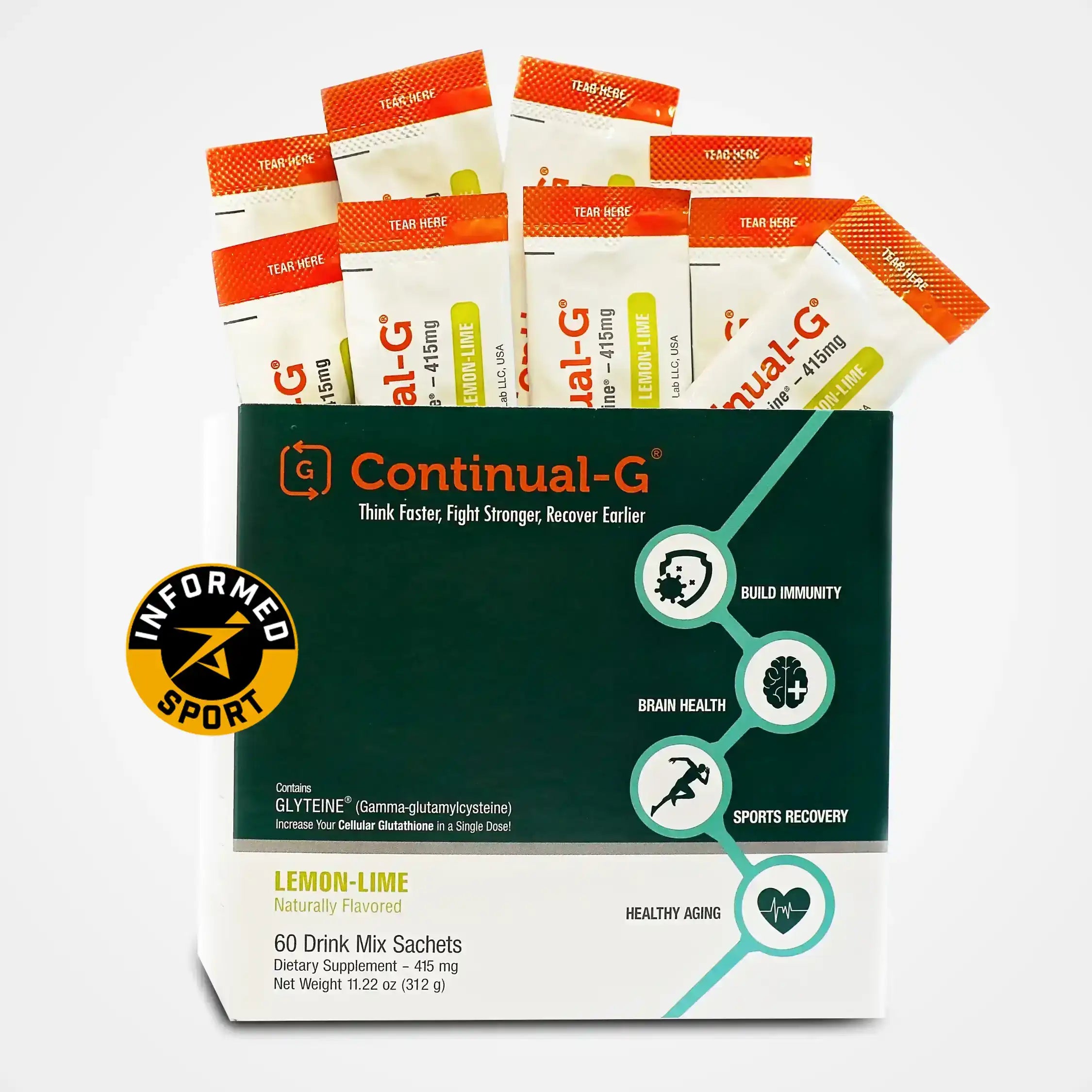
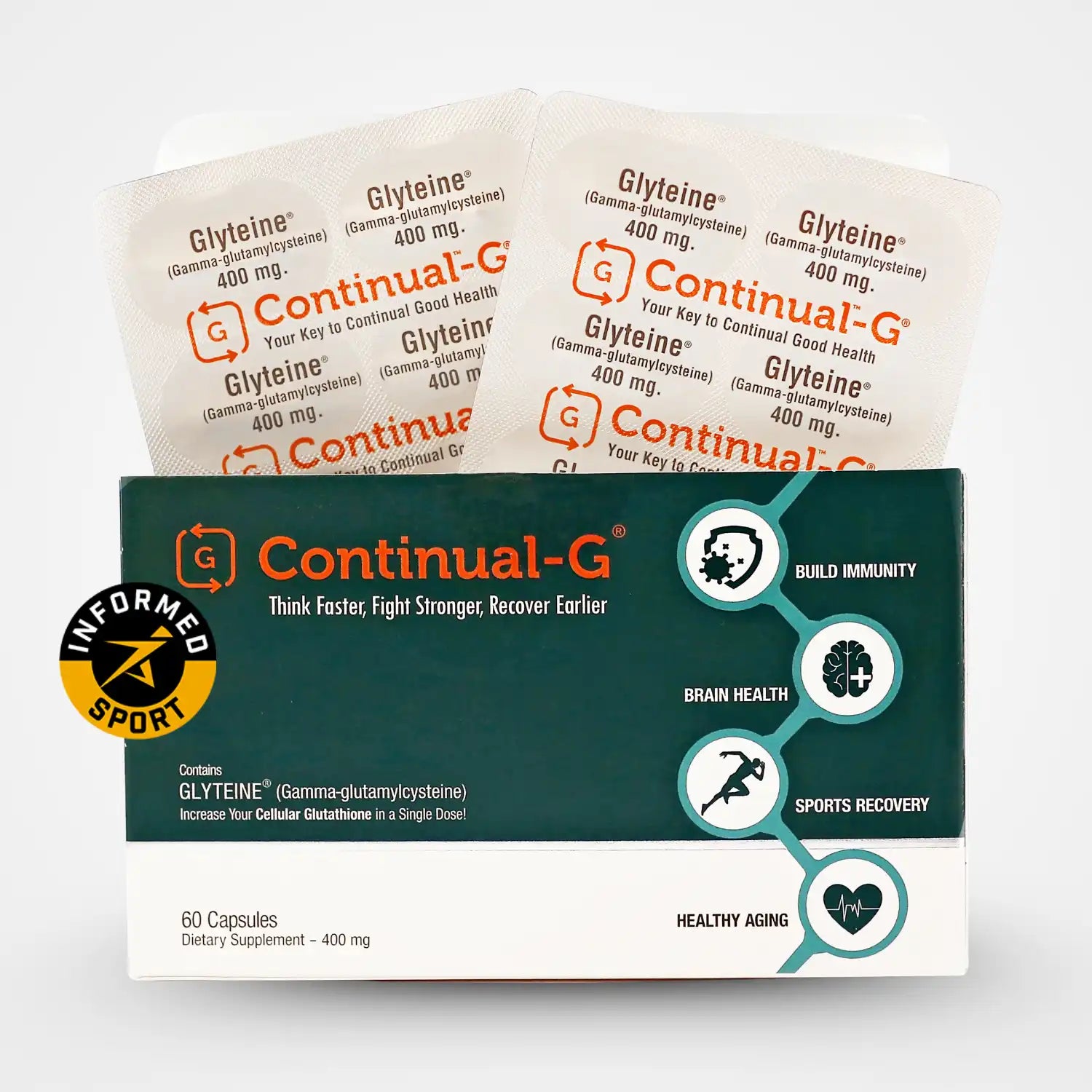
In a yet to be published study sponsored by Continual-G®, a 400 mg single dose confirmed this dose response by achieving a 20-25% peak increase over the same timeframe. Glyteine® is a branded form of GGC and was the ingredient used in both studies.
The idea that cells can use GGC directly is not new. In 1983, researchers showed that mice given GGC made more glutathione in their kidneys than mice given glutamate and cysteine. When the gate enzyme (GCL) was blocked with a drug that targets the activity of the GCL enzyme, the mice could still use GGC to make glutathione.
3. Take the finished molecule: oral and liposomal glutathione
Much swallowed glutathione is broken down in the gut into its amino acids, which your body can then reuse. What reaches the blood faces a second hurdle: glutathione inside cells is roughly a thousand times more concentrated than in blood plasma, so it doesn’t simply flow into a cell, and an enzyme on the surface of most cells (GGT) breaks glutathione down. Still, a six-month randomised trial found that 1,000 mg a day raised glutathione in blood and lymphocytes by around 30–35%, and a small pilot found liposomal glutathione raised blood levels within weeks. These products work on a slower timescale.
Glutathione Precursors: Quick Comparison
| Approach | What it supplies | Where it enters | Key human study | What was measured |
|---|---|---|---|---|
| NAC | Cysteine | Before step 1 | Many trials, mostly in clinical settings | Varies; strongest when glutathione is low |
| GlyNAC | Cysteine + glycine | Before step 1 (+ step 2) | Kumar et al. 2023, n=24 older adults, 16 weeks · Lizzo et al. 2022, n=114, 2 weeks | Red-blood-cell glutathione rose in older adults; no overall change vs placebo in the larger trial |
| GGC (Glyteine®) | γ-glutamylcysteine | After step 1 | Zarka & Bridge 2017, n=14 healthy adults, single dose | Lymphocyte glutathione rises above basal in a dose dependent manner peaking at 3 hours and returning to baseline by 5 hours. |
| Oral glutathione | Glutathione (mostly digested) | Amino acids re-enter before step 1 | Richie et al. 2015, n=54, 6 months | Blood and lymphocyte glutathione up ~30–35% at 1,000 mg/day |
| Liposomal glutathione | Encapsulated glutathione | Partly intact, partly digested | Sinha et al. 2018, n=12, 4 weeks, pilot | Blood glutathione stores rose |

Figure 3. Measurement windows in the main human studies. The GGC study is the only one that looked at what happens in the hours after a single dose; the others looked at weeks to months of daily use. This shows the studies asked different questions, not that one product is better.
Beyond the Human Bioavailability Study: What Lab and Animal Studies Add
These studies help explain how GGC works. They don’t show benefits in people.
- ✓ Used directly by cells (mice, 1983). GGC raised kidney glutathione more than its two amino acids did.
- ✓ An antioxidant in its own right (cells, 2012). In lab experiments, GGC worked as well as glutathione as a helper molecule for glutathione peroxidase-1, an enzyme that clears hydrogen peroxide.
- ✓ Safety testing (rats, 2012). Under OECD toxicology protocols, a single dose of 2,000 mg/kg caused no adverse effects, and 1,000 mg/kg a day for 90 days showed no adverse effects (the highest dose tested).
How to Choose: Four Questions to Ask of Any Precursor
- Which step does it supply? Raw materials before the gate, or the gate’s product after it?
- Where was glutathione measured? Inside cells (e.g. lymphocytes, red blood cells), in plasma, or in whole blood (cells plus plasma)? Keep in mind it is inside cells, where glutathione does most of its work. So, plasma levels do not tell you what you want to know, and neither do whole blood levels because you’re not informed where the glutathione increase is actually happening - it could be the plasma, it could be the cells and plasma or it could be the cells, which is what you want.
- In whom, and for how long? Healthy young adults, older adults with low levels, a single dose, or months of use?
- Does the product contain the studied dose? Check the label against the dose used in the research.
A brand that answers all four on its own website is giving you something to check. A brand that only says “clinically proven” isn’t.
About the Ingredient
Glyteine® was developed by INID Research Lab from research begun in Australia in 1997. In 2021, INID Research Lab was an awardee of Johnson & Johnson Innovation’s Next in Naturals QuickFire Challenge on Immune Support, and Glyteine® was a NutraIngredients Awards 2021 finalist. Awards recognise the research program; they are not endorsements of any health outcome.
Frequently Asked Questions
What is the best glutathione precursor?
There isn’t a single answer, because no study has compared them directly. NAC and GlyNAC supply raw materials and have the most trials behind them. Gamma-glutamylcysteine (GGC) is the immediate precursor and enters after the regulated first step; one human published bioavailability study showed it raised glutathione inside lymphocytes within hours of a single dose.
Is NAC a glutathione precursor?
Yes. NAC provides cysteine, one of the three amino acids in glutathione. It works before the first, regulated step of glutathione production. Read our full guide to NAC.
How long does a rise in glutathione from GGC last?
In the 2017 bioavailability study, lymphocyte glutathione peaked about 3 hours after a single dose and returned to baseline by about 5 hours. That is why GGC products are designed for daily use.
Can I just take glutathione instead?
You can. Much of it is broken down in digestion, but a six-month trial at 1,000 mg a day claimed modest rises in blood and lymphocyte glutathione. Note: The authors of the study did not provide or propose a biochemistry based mechanism that could explain how these rises were achieved.
Is gamma-glutamylcysteine safe?
In a 90-day study in rats run under OECD toxicology guidelines, 1,000 mg/kg a day caused no adverse effects. The 2017 human bioavailability study reported no adverse effects after single doses of 2 g and 4 g. As with any supplement, check with your healthcare provider first, especially if you are pregnant, nursing or taking medication.
Our View
We make Continual-G®, so read this with that in mind. We chose GGC because it is the one precursor that enters cells after the regulated step (GCL), and because its human bioavailability study measured glutathione inside cells.
It should be noted that none of the discussed glutathione supplements including glutathione, liposomal/mucosal glutathione, NAC, GlyNAC or GGC have been shown to prevent or treat chronic disease. The right choice depends on what you’re trying to support, and a conversation with your healthcare provider is a good place to start.
References
- Zarka MH, Bridge WJ. Oral administration of γ-glutamylcysteine increases intracellular glutathione levels above homeostasis in a randomised human trial pilot study. Redox Biol. 2017;11:631–636. PubMed
- Richman PG, Meister A. Regulation of γ-glutamyl-cysteine synthetase by nonallosteric feedback inhibition by glutathione. J Biol Chem. 1975;250(4):1422–1426. PubMed
- Lu SC. Glutathione synthesis. Biochim Biophys Acta. 2013;1830(5):3143–3153. PubMed
- Kumar P, et al. Supplementing glycine and N-acetylcysteine (GlyNAC) in older adults improves glutathione deficiency, oxidative stress, mitochondrial dysfunction, inflammation, physical function, and aging hallmarks: a randomized clinical trial. J Gerontol A Biol Sci Med Sci. 2023;78(1). doi:10.1093/gerona/glac135
- Lizzo G, et al. A randomized controlled clinical trial in healthy older adults to determine efficacy of glycine and N-acetylcysteine supplementation on glutathione redox status and oxidative damage. Front Aging. 2022. Full text
- Richie JP Jr, et al. Randomized controlled trial of oral glutathione supplementation on body stores of glutathione. Eur J Nutr. 2015;54(2):251–263. Abstract
- Sinha R, et al. Oral supplementation with liposomal glutathione elevates body stores of glutathione and markers of immune function. Eur J Clin Nutr. 2018;72(1):105–111. PubMed
- Ferguson G, Bridge W. Glutamate cysteine ligase and the age-related decline in cellular glutathione: the therapeutic potential of γ-glutamylcysteine. Arch Biochem Biophys. 2016;593:12–23.
- Braidy N, Zarka M, Welch J, Bridge W. Therapeutic approaches to modulating glutathione levels as a pharmacological strategy in Alzheimer’s disease. Curr Alzheimer Res. 2015;12(4):298–313.
- Anderson ME, Meister A. Transport and direct utilization of γ-glutamylcyst(e)ine for glutathione synthesis. Proc Natl Acad Sci USA. 1983;80(3):707–711.
- Quintana-Cabrera R, et al. γ-Glutamylcysteine detoxifies reactive oxygen species by acting as glutathione peroxidase-1 cofactor. Nat Commun. 2012;3:718. doi:10.1038/ncomms1722
- Chandler SD, Zarka MH, et al. Safety assessment of gamma-glutamylcysteine sodium salt. Regul Toxicol Pharmacol. 2012;64(1):17–25.
*These statements have not been evaluated by the Food and Drug Administration. This product is not intended to diagnose, treat, cure, or prevent any disease. This article is for education and is not medical advice. Speak with your healthcare provider before starting any supplement, especially if you are pregnant, nursing, taking medication or managing a health condition.